
Fishing & Rivers
Where the Rivers Run: Fishing in Siuslaw Country
From salmon fishing near Old Town Florence to winter mornings along forested tributaries, the waters of Siuslaw Country offer a close connection to the Oregon coast—and plenty of reasons to follow the river inland.
Stand beside the Siuslaw River in Florence and it is easy to think of the water as part of the view: the bridge, the boats, the reflections beneath the waterfront buildings. Spend a little longer watching, however, and another landscape comes into focus. Current moves around pilings. An angler studies the end of a rod. Somewhere upstream, beyond the bends visible from town, smaller streams feed the river that eventually meets the Pacific.
For anyone interested in fishing, those connections are worth exploring.
The Siuslaw travels approximately 109 miles from its headwaters in the Coast Range and Lorane Valley to the ocean near Florence. Along the way, it passes through forests, agricultural valleys, wetlands, and a broad estuary. That variety helps explain why a fishing trip near Florence can feel so different from one farther inland, even when both take place along the same river.
The relationship between people and these waters reaches far beyond recreational fishing. The Siuslaw people lived throughout the watershed, with fishing, gathering, and river travel woven into daily life. The history shared by the Confederated Tribes of Coos, Lower Umpqua and Siuslaw Indians describes communities along the region’s estuaries and rivers, where food was harvested and shared. Any appreciation of these waterways should begin with the recognition that they are part of a living Indigenous homeland.
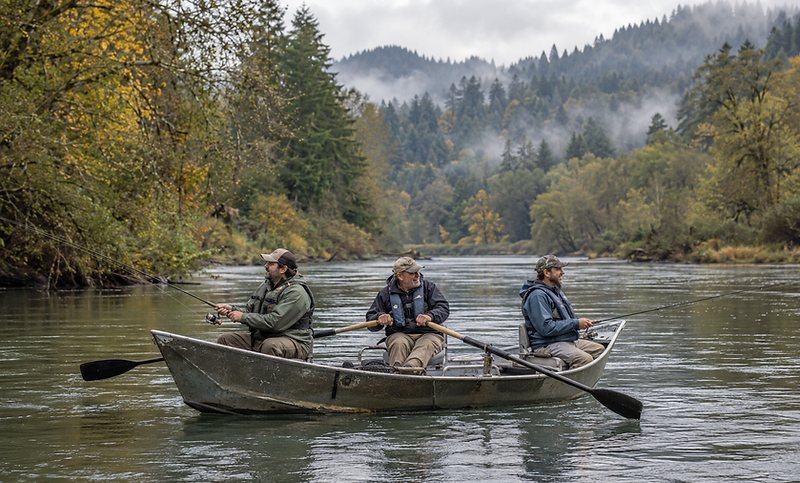
Around Florence, the lower Siuslaw provides an accessible introduction to the region’s fishing. The Port of Siuslaw and Cushman are established access points, and the lower river is known for its fall salmon fishery. Their proximity to town makes it possible to build a day around the water without organizing an expedition into the backcountry. A morning fishing trip can end with lunch in Old Town; an afternoon along the waterfront can become an opportunity to learn where and how people fish.
Fall Chinook are a major attraction, but knowing the name of the river is only the beginning of planning a salmon trip. Regulations distinguish between stretches of the mainstem, and fishing opportunities change as one moves upstream. Coho require particular attention: wild coho opportunities on coastal rivers are established through specific seasonal rules, so the presence of fish does not automatically mean they may be targeted or kept. Checking the current opening is part of preparing for the day.
Farther inland, winter steelhead give the Siuslaw a different character. This is fishing associated with waterproof jackets, cold fingers, and the patience to work through promising water. Oregon Department of Fish and Wildlife identifies late January into March as a typical peak period for the Siuslaw’s winter steelhead run. Actual conditions still shape each outing, and run timing should always be considered alongside the legal season for the intended stretch.
The Whittaker Creek area is an important place to get acquainted with that inland river. ODFW identifies the nearby Siuslaw access as a location for both bank and boat anglers, including those pursuing hatchery steelhead. Lake Creek is another significant tributary, with Highway 36 following portions of its course and an established boat access near Deadwood Creek. Together, these places offer starting points for exploring the watershed beyond the tidal reaches around Florence.
At Whittaker Creek, there is also a reason to put down the rod. The Bureau of Land Management identifies the creek as a place where visitors can observe Chinook, coho, and steelhead during fall and winter. Watching fish return to a relatively small stream gives the larger river’s fishing story a more intimate scale. The fish that inspire so much anticipation downstream are also completing a demanding journey toward spawning habitat. Viewing fish in the creek and fishing the adjacent Siuslaw are separate activities; visitors should follow the rules for each location.
For anglers learning to fish moving water, there is value in choosing a manageable stretch and spending time understanding it. ODFW recommends learning a river and covering its runs and pools methodically, rather than constantly chasing reports of better fishing elsewhere. A bobber and jig is one established approach for beginning steelhead anglers. The equipment matters, but so does learning to notice where the current changes and how a presentation travels through the water.
Closer to Florence, the North Fork Siuslaw deserves a place on the itinerary. Bender Landing, reached from North Fork Road, offers a boat ramp, fishing platform, picnic facilities, and a restroom. It provides a practical option for someone who wants an established access point, whether the plan involves fishing, launching a small boat, or simply spending an hour beside the river. Lane County requires a parking pass at the site.
The North Fork also illustrates why a river should never be treated as one uninterrupted fishing area. Its regulations distinguish between water below and above Meadows Bridge, and its tributaries are listed as closed to angling. A promising-looking creek beside the road may be important habitat without being an available fishing destination. Reading the boundaries carefully helps visitors explore with confidence.
South of Florence, the Siltcoos River offers another way to experience the region’s waterways. Along its corridor, the landscape includes coastal shore pine forest and trails leading toward the beach. The Forest Service’s Siltcoos area includes the Lagoon and Waxmyrtle trails, giving companions who do not fish something worthwhile to explore as well. It is a good reminder that a river outing can accommodate several interests without everyone needing a rod.
Fishing plans here require attention to the distinction between Siltcoos Lake and the river downstream. The published coho regulations describe designated lake waters above the Highway 101 bridge; they should not be interpreted as permission to fish for coho throughout the entire river corridor. Matching the location on the map to the location described in the regulations is especially important around connected lakes, outlets, and tributaries.
For those who want to explore farther, the Siuslaw sits between other substantial coastal watersheds. The Alsea system borders it to the north, while the Smith River, a tributary of the Umpqua, lies to the south. These are neighboring systems with their own character and management rules. They broaden the possibilities for a fishing-focused visit, but the Siuslaw itself offers ample reason to slow down and get to know one watershed well.
Much of what makes that fishing possible happens out of sight of the most familiar boat ramps. In the North Fork watershed, a restoration project used helicopters to place nearly 400 large trees into five tributary streams. The purpose was to rebuild habitat complexity: pools, cover, and connections with floodplains that young salmon need. The Siuslaw Watershed Council describes the work as a partnership involving the Forest Service, the Confederated Tribes, and other participants.
That work changes how a person might look at a stream. A fallen tree can create shelter. A small side channel can provide space for young fish. The quieter waters beyond the fishing holes help support the returns that bring anglers back to the main river. Caring about fishing here means caring about those places, too.
Before heading out, consult ODFW’s current fishing regulations and updates, confirm the rules for the exact water you intend to fish, and check access conditions with the managing agency. Species, season, hatchery markings, gear, and location can all affect what is allowed. Those few minutes of preparation leave more room to enjoy the day once you arrive.
Then give the river some time. Watch a stretch of current before making the first cast. Notice the wooded bank across the water, the bend that disappears upstream, and the small details that are easy to miss from a passing car.
A fish may be what brings you to Siuslaw Country’s rivers. Getting to know the water can be what brings you back.