Historic Landmarks
10 of the Best Historical Sights in the Siuslaw Region
A lighthouse above the Pacific, a train depot that changed towns, and covered bridges tucked into forested valleys: the Siuslaw region rewards anyone willing to look a little closer. These ten stops reveal the stories behind some of our most familiar scenery.
History is easy to pass on the way to somewhere else. In Florence, it might be the building beside your dinner reservation or the bridge you cross without thinking. Farther inland, it waits along a creek, where an old timber span still carries a local road.
The story begins long before these structures. The Siuslaw people lived throughout the watershed that bears their name, with villages, waterways, and trading connections rooted in this landscape. They remain part of the region today through the Confederated Tribes of Coos, Lower Umpqua and Siuslaw Indians. That continuing history belongs at the center of any exploration of Siuslaw Country. Tribal history
For a closer look at the region’s surviving landmarks, these are ten of our favorite places to begin.


- Heceta Head Lighthouse and the Keeper’s House
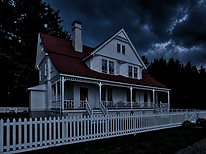
The approach is part of the experience: a trail rising from the beach, glimpses of ocean through the trees, and finally the white lighthouse standing above the Pacific.
First illuminated in 1894, Heceta Head’s light served mariners along this stretch of coast. The surviving assistant lightkeeper’s house, built in 1893, adds the domestic side of the story: this was also a place where people lived and worked. It now operates as a bed-and-breakfast.
Allow time for the half-mile uphill walk from the parking area. Public access inside the lighthouse is limited to the ground floor and depends on staffing and weather; the upper levels are closed. Oregon State Parks
 2. Siuslaw River Bridge
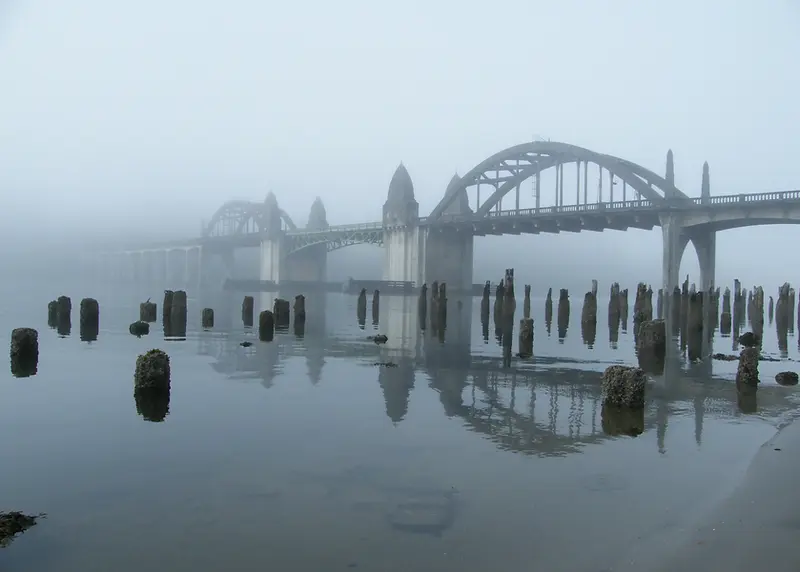
Florence’s most recognizable landmark deserves a visit on foot as well as a drive across it.
Completed in 1936, the Siuslaw River Bridge was one of the major coastal bridges whose design and construction were directed by engineer Conde B. McCullough. These crossings replaced ferries and completed essential links in the Oregon Coast Highway. For travelers, that meant a very different journey along the coast. ODOT history · Bridge history
From the Old Town waterfront, take in the arches and towers as a whole. Then look more closely at the decorative details. A structure built to solve a transportation problem also gave Florence an enduring part of its identity.
 3. Siuslaw Pioneer Museum
At 278 Maple Street, the Siuslaw Pioneer Museum offers the context that makes the rest of a historical outing more rewarding. Its building was constructed as Florence’s school in 1905, giving the museum a historic setting of its own. Museum history
Inside, the collection includes Indigenous objects, household belongings, fishing and logging equipment, an early telephone switchboard, and a control panel once used by the drawbridge operator. These everyday objects help explain how people worked, communicated, and made homes here. Museum exhibits
Start here before walking through Old Town. A familiar view becomes more interesting when you can picture the labor and daily routines behind it.
 4. The Kyle Building and Historic Old Town
For a particularly revealing stop along Bay Street, look up at the William Kyle and Sons Building near Laurel Street.
Built in 1901, this false-fronted Italianate building served as a mercantile store, while its upstairs provided a place for social gatherings. It brings two parts of early town life together: buying what a household needed and finding a place to meet the neighbors. Kyle Building historical marker
Make it the starting point for a slower walk through Old Town. Read the historical markers, study the upper stories, and turn toward the river. The waterfront setting helps explain why commerce gathered here and why these streets still draw people together.
 5. The Former Mapleton Railroad Depot
One of Florence’s most interesting historic buildings began its working life upriver.
According to its historical marker, the Southern Pacific depot was constructed in Mapleton in 1912. Highway widening threatened it in 1976, but the building was saved and rebuilt at its present Florence location in 1977. Mapleton Depot historical marker
Today, the former station houses the Waterfront Depot restaurant on Bay Street. Its second life makes it an appealing example of preservation through continued use. Visitors can appreciate the exterior during an Old Town walk or plan a meal inside the building. Waterfront Depot
Remember its original purpose as you pass: this small waterfront landmark carries a piece of Mapleton’s history with it.
 6. The Sea Lion Caves
Sea Lion Caves earns its place here through the history of coastal tourism as well as its remarkable natural setting.
The attraction opened to the public in August 1932. Early visitors reached the cave by a demanding route of trails and stairs; the elevator opened in June 1961 after years of difficult construction. Those changes tell a story about the effort involved in making this rugged coast accessible to travelers. Sea Lion Caves history
Located about eleven miles north of Florence, it pairs naturally with Heceta Head. Wildlife remains the main attraction, but sea lions move between the cave and outside ledges seasonally, so their presence inside is never something to assume.
 7. Honeyman’s Historic Cleawox Lake Buildings
At Jessie M. Honeyman Memorial State Park, a beach outing can also become an introduction to Depression-era craftsmanship.
Civilian Conservation Corps crews developed park features between 1935 and 1940. Surviving historic structures include the 1938 stone-and-log bathhouse at Cleawox Lake and rustic kitchen shelters from 1937. Their materials and proportions reward a closer look, especially against the surrounding forest and water.
The park honors Jessie M. Honeyman, an advocate for scenic preservation and Oregon’s parks. Visit the Cleawox day-use area with enough time to notice the buildings as well as the dunes.
Planning note: Oregon State Parks currently lists a closure of all campground loops and the day-use area from January 1 through February 28, 2027, for improvement work. Check current notices before visiting. Oregon State Parks
 8. Deadwood Covered Bridge
The inland portion of Siuslaw Country has its own architectural landmarks, and Deadwood Covered Bridge is among the most memorable.
Built in 1932, the 105-foot span crosses Deadwood Creek. Its unusual detail is underfoot: the floor was deliberately slanted to accommodate the curve in the road. A major restoration in 1986 repaired the neglected structure and replaced several components, including its portals. Travel Lane County
This is a rewarding detour for anyone interested in practical, everyday engineering. The setting invites a slower pace, but the bridge remains a working road crossing. Park clear of traffic and approaches when stopping to admire it.
 9. Lake Creek Covered Bridge
Also known as Nelson Mountain Bridge, this covered crossing near Greenleaf makes a good companion to Deadwood on an inland history drive.
Travel Lane County dates the 105-foot bridge to 1928. Its history includes damage to the portals from tall logging loads and a substantial renovation in 1984, when concrete slabs replaced the wooden floor. Travel Lane County
Those alterations are part of what makes it interesting. The bridge has had to accommodate changing vehicles and continued use while retaining its recognizable covered form.
Find it on Nelson Mountain Road just off Highway 36. Allow time to appreciate the forested setting, and remember that local traffic still uses the crossing.
 10. The Siuslaw River Jetties
At the river mouth, the scale of the region’s maritime ambitions becomes visible.
Construction of the North and South Jetties began in the early 1890s. Funding interruptions slowed progress, and renewed efforts followed the formation of the Port District in 1909. The jetties were completed in 1917, helping improve navigation for vessels serving the river’s mills and canneries. Navigating the Siuslaw River historical marker
View them from shore and consider the work required to establish a harbor where a shifting river meets the Pacific. Their history connects the ocean to the waterfront buildings and industries farther upstream.
For this stop, keep your exploration on shore rather than climbing the jetty rocks.
A rewarding first outing can stay close to Florence: visit the museum, walk to the Kyle Building and former Mapleton depot, and finish with a view of the bridge. Save the covered bridges for a separate inland drive, or pair the lighthouse and Sea Lion Caves on a trip north.
Return to a familiar place with one of these stories in mind. You may find yourself noticing a doorway, a timber joint, or a curve in the river that you have passed for years.